The Backup Nobody Budgets For: How America's Aversion to Redundancy Is Writing Checks Disaster Will Cash
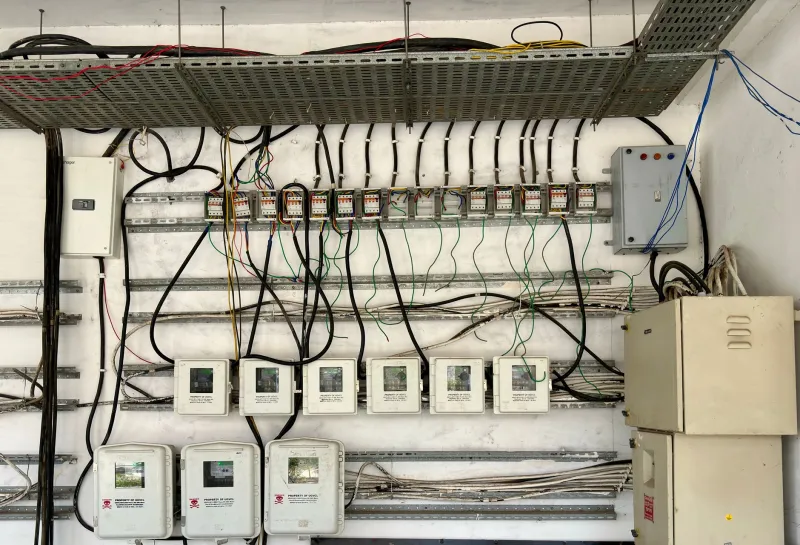
There is a principle so fundamental to engineering that it predates the discipline itself: never rely on a single path. Redundancy—the deliberate duplication of critical systems so that a secondary option exists when the primary fails—is not a novel concept. It is the reason commercial aircraft carry multiple hydraulic systems. It is the reason hospital generators exist. It is, in theory, the reason infrastructure planners are paid to think ahead.
Yet when it comes to America's most consequential public systems—its power grids, water networks, and transportation corridors—redundancy is treated less like a design standard and more like an unaffordable indulgence. The pattern is consistent and well-documented: a single system is built to peak efficiency, backup capacity is stripped out to reduce upfront costs, and the arrangement holds until the day it doesn't. At that point, the price of redundancy—never built—is paid in full, with interest.
The Arithmetic That Keeps Getting the Math Wrong
At the center of this problem is a cost-benefit miscalculation that persists across every level of American infrastructure governance. When planners evaluate a proposed redundant system, they are asked to justify spending real money today against a probabilistic future event. The backup transmission line, the parallel water main, the alternate highway corridor—each carries a price tag that is immediate, visible, and politically inconvenient.
The cost of not building that redundancy, by contrast, is diffuse, deferred, and difficult to assign to any particular budget cycle or decision-maker. This asymmetry is not accidental. It is baked into the fiscal frameworks that govern public infrastructure investment, where annual appropriations cycles reward efficiency and penalize what accountants classify as excess capacity.
The Federal Emergency Management Agency has estimated that every dollar invested in hazard mitigation saves approximately six dollars in disaster response and recovery costs. Yet that six-dollar return accrues years or decades after the investment decision, often to different agencies, jurisdictions, and administrations than those who bore the original cost. In a system where political credit follows budget lines, the incentive structure consistently points away from redundancy.
The Grid That Had No Plan B
Few case studies illustrate this dynamic more vividly than the February 2021 Texas power grid failure. When a sustained winter storm pushed temperatures across the state to historic lows, the Electric Reliability Council of Texas—ERCOT—found itself operating a grid designed with minimal interconnection to neighboring systems and insufficient weatherization requirements for generating equipment.
The failure cascaded precisely because redundancy had been systematically disincentivized. Texas operates a largely isolated grid, a deliberate design choice rooted in regulatory and economic preferences rather than engineering logic. When generating units began tripping offline, there was no adjacent capacity to draw upon at scale. The backup, in effect, had never been built.
The economic toll exceeded $195 billion by multiple independent estimates. Hundreds of Texans died. Water systems froze. Supply chains for semiconductors and petrochemicals—industries with global reach—were interrupted for weeks. The cost of weatherization and modest grid interconnection, investments that could have mitigated the event substantially, would have been a fraction of that figure. The math was always there. The political will to act on it was not.
Water Systems and the Illusion of Redundancy
America's water infrastructure presents a subtler version of the same problem. Many municipal water systems operate with redundant treatment capacity on paper—multiple treatment trains, parallel pump stations—yet remain acutely vulnerable because that redundancy exists within a single interconnected network rather than across genuinely independent pathways.
When a water main ruptures in a major urban system, or when a cyberattack disrupts treatment plant controls, the apparent redundancy within the network frequently proves insufficient. The 2021 Oldsmar, Florida water treatment facility intrusion—in which an attacker briefly manipulated sodium hydroxide levels to potentially dangerous concentrations—exposed how thoroughly a single control system compromise can override physical redundancies.
The American Society of Civil Engineers' 2021 Infrastructure Report Card assigned drinking water infrastructure a C- grade, noting that the nation's 2.2 million miles of pipes include a significant proportion installed before World War II. Redundancy in aging systems is not merely underfunded; in many cases, it was never incorporated into original designs that assumed indefinite serviceable life.
Transportation Networks and the Single-Point Trap
The collapse of the Francis Scott Key Bridge in Baltimore in March 2024 delivered an immediate lesson in transportation redundancy—or the absence of it. The bridge carried a substantial share of Interstate 695 traffic, and its sudden loss created regional gridlock that disrupted supply chains for automobile transport, diverted commercial shipping, and imposed costs on the regional economy measured in hundreds of millions of dollars per week.
The event was not unforeseeable in a general sense. Engineers and planners have long understood that major bridges represent potential single points of failure in regional transportation networks. What it exposed was not an engineering failure but a planning philosophy: the assumption that primary infrastructure will remain functional, combined with an unwillingness to fund the alternate corridors and redundant crossings that would limit exposure when it does not.
This pattern repeats across freight rail chokepoints, interstate highway corridors, and port facilities. The national freight network, as documented by the Department of Transportation, contains identifiable bottlenecks where the failure of a single facility or corridor creates disproportionate disruption. Addressing those bottlenecks through redundant capacity is expensive. Leaving them unaddressed is more expensive still—just not on the same budget line.
Rethinking the Investment Framework
Changing this dynamic requires more than engineering awareness. It demands a fundamental restructuring of how infrastructure investment decisions are evaluated and financed.
Several approaches have demonstrated promise. Life-cycle cost analysis—which incorporates failure probability, recovery costs, and downstream economic impacts into project evaluation—provides a more accurate accounting of redundancy's value than upfront capital comparisons alone. Some states have begun requiring resilience assessments as part of major infrastructure project approvals, creating a formal mechanism to surface redundancy gaps before construction rather than after catastrophe.
The Infrastructure Investment and Jobs Act of 2021 included provisions specifically oriented toward resilience, including dedicated funding streams for grid hardening and transportation network strengthening. Whether those provisions translate into genuine redundancy investment or are absorbed into deferred maintenance on existing single-system infrastructure remains an open question that will be answered project by project over the coming decade.
At the federal level, the Office of Management and Budget has begun incorporating resilience metrics into certain infrastructure grant programs, creating at least a partial financial incentive for redundancy. Expanding and standardizing those metrics across all major federal infrastructure programs would represent a meaningful structural shift.
The Cost of Waiting for the Lesson
The underlying problem with America's approach to redundancy is not that planners are unaware of the principle. It is that the institutional and fiscal environment consistently makes the wrong choice rational in the short term. Decision-makers who fund redundancy rarely receive credit for the disasters that never happen. Those who inherit the consequences of systems built without backup rarely bear responsibility for the original decision.
Breaking this cycle requires treating redundancy not as an optional upgrade but as a baseline design standard—one whose cost is incorporated into project budgets from the outset rather than value-engineered away before groundbreaking. The engineering case for redundancy has always been sound. The work that remains is building the policy and financial architecture to match.