Built for a Climate That No Longer Exists: The Engineering Crisis Hiding in Plain Sight
In the summer of 2021, a heat dome settled over the Pacific Northwest with a ferocity that meteorologists described as a one-in-a-thousand-year event. Temperatures in Portland, Oregon, crept past 116 degrees Fahrenheit. Power transformers failed. Streetcar cables buckled. Roads cracked and heaved. The region's infrastructure, engineered for a temperate maritime climate, had no meaningful defense against conditions so far outside its design parameters.
That episode was not an anomaly. It was a preview.
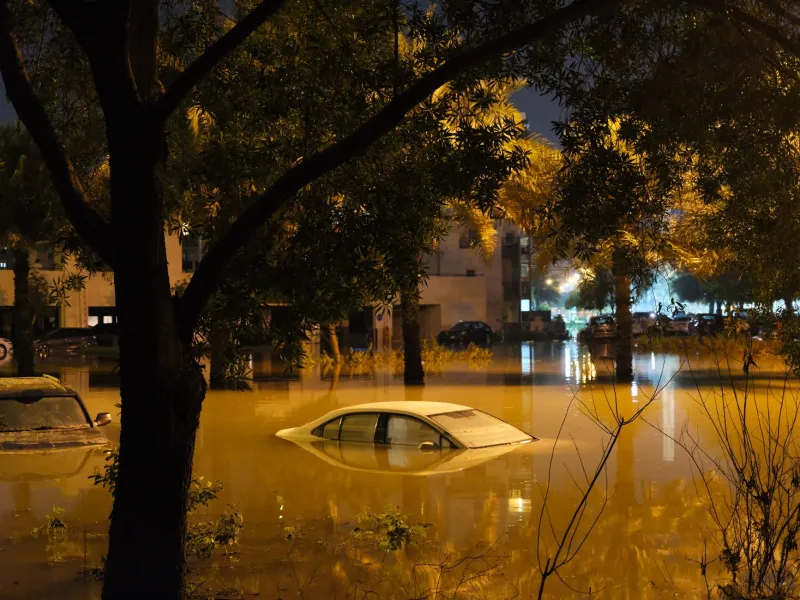
From the flooding of New York City's subway tunnels during Hurricane Ida to the cascading grid failures that left millions of Texans without heat during the February 2021 winter storm, a consistent pattern is emerging: American infrastructure is being stress-tested by weather events that fall well outside the historical baselines used to design it. And in case after case, the systems are not holding.
The underlying problem is not simply aging hardware or deferred maintenance, though both contribute. It is something more foundational — a mismatch between the climate assumptions baked into engineering standards decades ago and the atmospheric reality those systems now operate within.
The Baseline Problem
Engineering standards governing infrastructure design in the United States are largely built around historical climate data — specifically, statistical records of temperature extremes, precipitation intensity, storm frequency, and flood elevation compiled over the 20th century. The Federal Emergency Management Agency's flood maps, for instance, rely heavily on historical stream gauge data. The American Society of Civil Engineers' design codes reference climatological norms that predate the acceleration of warming observed over the past three decades.
The implicit assumption embedded in these frameworks is that the past is a reliable guide to the future. Climate science has rendered that assumption untenable.
"We are designing infrastructure to survive conditions that no longer describe where we're headed," says one civil engineer specializing in climate adaptation who works with municipal governments across the Southeast. "The 100-year flood is not what it used to be. In many watersheds, we're seeing those events every 15 or 20 years. The math underlying our design codes hasn't caught up."
This gap has real consequences. A drainage system sized to handle a two-inch-per-hour rainfall event will be overwhelmed when three inches fall in 45 minutes — a scenario that is becoming increasingly common across the Mid-Atlantic and Gulf Coast regions. A transmission line rated for a maximum ambient temperature of 95 degrees Fahrenheit becomes a liability in a region now regularly experiencing 108-degree days.
Case Studies in Failure
The evidence is not theoretical. It is accumulating in the form of costly, sometimes deadly infrastructure failures across the country.
In August 2023, flooding in Vermont caused catastrophic damage to roads, bridges, and culverts across the state — infrastructure that had been rebuilt following Tropical Storm Irene in 2011. Engineers noted that many of the structures that failed had been reconstructed to the same standards as their predecessors, without accounting for the upward trend in extreme precipitation events in the region.
In Phoenix, Arizona, electrical utilities have grappled with a growing phenomenon known as heat-related cable sag, in which transmission lines expand and droop under sustained extreme heat, reducing clearance and increasing the risk of contact with vegetation or structures. The design tolerances for these lines were established during an era when sustained temperatures above 110 degrees Fahrenheit were far less frequent.
Along the Gulf Coast, storm surge modeling used to site and design critical facilities — wastewater treatment plants, emergency operations centers, hospital campuses — has in several instances proven inadequate when measured against the actual surge profiles generated by intensifying hurricanes. The result has been flooded facilities at precisely the moments communities need them most.
Regulatory Inertia and the Standards Gap
Updating engineering design standards is not a simple administrative task. The codes and guidelines that govern infrastructure design in the United States emerge from a complex ecosystem of federal agencies, professional engineering associations, state regulatory bodies, and local jurisdictions. Consensus-based standard-setting processes, while valuable for ensuring technical rigor, move slowly — often over cycles of five to ten years.
Meanwhile, the climate is not waiting.
Several federal agencies have begun acknowledging the problem. The Federal Highway Administration has published guidance encouraging state departments of transportation to incorporate climate projections into asset management planning. The Army Corps of Engineers has updated some of its guidance documents to reference future climate scenarios. FEMA has taken steps toward incorporating forward-looking flood data into its mapping processes.
But guidance is not the same as requirement. In the absence of mandatory updated standards, infrastructure owners and designers often default to historical baselines — partly out of familiarity, partly because designing to more stringent future-climate criteria increases upfront costs, and partly because the regulatory and liability frameworks have not yet caught up to the science.
"There's a real tension between what engineers know they should be doing and what the procurement and approval processes are set up to incentivize," notes one infrastructure policy analyst who has advised state transportation agencies. "If the standard says X, and you design to 1.5X because you believe the climate warrants it, you may face questions about why you spent the extra money. The accountability structures aren't aligned with the risk."
The Financial Architecture of Resilience
The cost dimension of this challenge is significant but frequently misunderstood. Critics of climate-resilient design standards often point to higher upfront construction costs as a barrier to adoption. Those comparisons, however, rarely account for the full lifecycle cost of infrastructure that fails prematurely or requires repeated repair.
Research from the National Institute of Building Sciences has consistently found that every dollar invested in hazard mitigation yields substantial returns in avoided losses — figures that range from four to eleven dollars depending on the hazard type and intervention. The economic case for building to higher standards is strong when viewed across the full asset lifecycle rather than the initial capital outlay.
Federal infrastructure investment programs, including those funded through the Infrastructure Investment and Jobs Act, have begun incorporating resilience criteria into grant eligibility and scoring. The Department of Transportation's PROTECT program, specifically designed to fund climate resilience projects, represents a meaningful step toward aligning federal dollars with climate-forward design. But the scale of investment required to systematically upgrade design standards across the nation's infrastructure portfolio dwarfs current program allocations.
What Updated Standards Should Look Like
Engineers and climate scientists working at the intersection of these fields generally agree on several principles that should guide the next generation of design standards.
First, standards should incorporate probabilistic climate projections rather than relying solely on historical observations. This means designing infrastructure to perform across a range of plausible future climate scenarios rather than a single historical baseline.
Second, standards should reflect regional differentiation. A culvert in coastal Louisiana faces fundamentally different future climate risks than one in the Colorado Rockies. One-size-fits-all national standards, while administratively convenient, may systematically underprotect the highest-risk areas.
Third, design standards should build in adaptive capacity — the ability to be upgraded or modified as climate projections are refined. Infrastructure that cannot be economically modified in response to new information locks in vulnerability for decades.
Finally, the standard-setting process itself needs reform. Accelerating the review and update cycles for major engineering codes, and integrating climate science expertise more formally into those processes, would help close the gap between scientific understanding and design practice.
The Window for Action
The United States is entering a period of substantial infrastructure investment. Billions of dollars are flowing into roads, bridges, water systems, energy infrastructure, and broadband networks. The decisions being made today about design standards and specifications will determine the resilience of those assets for the next 50 to 100 years.
Building to yesterday's climate is not a neutral choice. It is a gamble — one that transfers risk to future generations and future budgets. The engineering community, the regulatory establishment, and the policymakers controlling the investment pipeline all have roles to play in closing the gap between the climate infrastructure was designed for and the one it will actually face.
The weather is not going to wait for the next code update cycle.