From Reactive to Resilient: How States Are Rewiring the Way Infrastructure Gets Funded
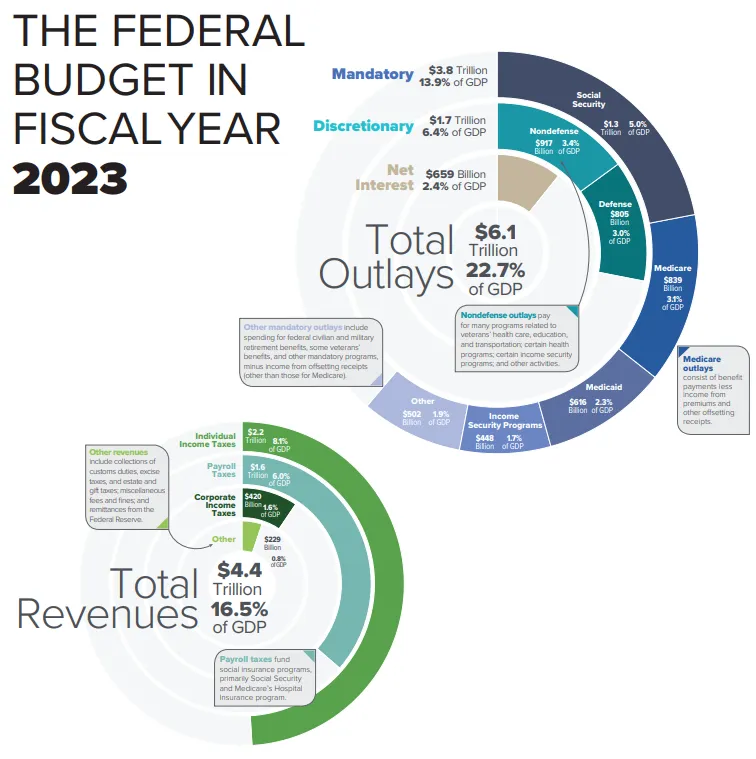
Photo: Congressional Budget Office, Public domain, via Wikimedia Commons
The Budget Cycle That Breaks Infrastructure
For most of American government, infrastructure spending follows a predictable and destructive rhythm. Maintenance is deferred when budgets tighten. Deferred maintenance accelerates deterioration. Deterioration produces failures. Failures generate emergency appropriations. Emergency appropriations cost multiples of what proactive investment would have required. Then the cycle begins again.
This is not a mystery to the officials who perpetuate it. It is, in most cases, a rational response to political and fiscal incentives that reward visible new construction over invisible preventive care, and that punish risk spending in advance of a risk that may not materialize on any given elected official's watch. Changing infrastructure outcomes in America, therefore, requires changing the incentive structures that produce those outcomes — and a handful of states are demonstrating that this is possible.
Reframing Spending as Risk Mitigation
The most significant conceptual shift underway in forward-thinking jurisdictions is the reframing of infrastructure hardening from a discretionary expenditure to a risk management obligation. This is not merely a rhetorical change. When infrastructure investment is categorized alongside insurance premiums, reserve funds, and actuarially justified liability provisions, it acquires a different standing in budget negotiations.
Colorado has been among the more aggressive adopters of this framing. The state's Office of Risk Management has worked with transportation and water agencies to develop probabilistic cost models that quantify the expected annual cost of infrastructure failure across different maintenance investment scenarios. Presenting budget committees with a risk-adjusted cost comparison — rather than a simple capital request — has shifted conversations about what constitutes fiscally responsible behavior.
Virginia has pursued a related strategy through its SMART SCALE program, which evaluates transportation project proposals through a multi-factor scoring system that explicitly weights resilience and reliability outcomes alongside traditional metrics like traffic throughput. By embedding resilience as a scored criterion in project selection, the state effectively institutionalizes its value in funding decisions.
Dedicated Funding Mechanisms That Outlast Election Cycles
One of the structural weaknesses of infrastructure finance is its vulnerability to annual appropriations battles. A resilience investment program that depends on discretionary funding can be zeroed out when revenues tighten or political priorities shift. Several states have responded by creating dedicated funding mechanisms that insulate infrastructure hardening from the annual budget cycle.
New Jersey's Transportation Trust Fund, restructured following years of fiscal instability, provides a model of how dedicated revenue streams — in this case, a combination of gas taxes and bond proceeds governed by statutory floor commitments — can maintain infrastructure investment continuity across administrations. While the fund has faced its own challenges, its basic architecture illustrates the principle: ring-fencing infrastructure revenue reduces the political surface area available for diversion.
At the municipal level, some cities have experimented with resilience bonds — debt instruments specifically structured around hazard mitigation outcomes, with repayment mechanisms tied to documented savings in avoided disaster costs. Chicago's issuance of green bonds to finance stormwater infrastructure upgrades demonstrated that capital markets will price resilience-oriented projects favorably when the underlying savings case is clearly documented.
Federal Leverage as a Catalyst for State Reform
The Infrastructure Investment and Jobs Act created meaningful new opportunities for states willing to restructure their own funding frameworks to capture federal leverage. Programs such as the Resilience Improving, Strengthening, and Transforming (RESIST) provisions and the PROTECT formula program reward states that demonstrate proactive resilience planning with enhanced funding access.
The dynamic this creates is significant. States that invest in resilience planning infrastructure — risk assessments, asset vulnerability analyses, long-term investment roadmaps — unlock federal funding at higher match ratios than states operating reactively. The federal architecture, in other words, is beginning to price the value of institutional capacity, not just project-level investment.
Several states have recognized this and are using the prospect of enhanced federal access as a political argument for investing in resilience planning capacity now. Oregon, for example, has used its Seismic Rehabilitation Grant Program as a template for demonstrating how state-level investment in vulnerability assessment translates directly into competitive positioning for federal resilience dollars.
The Political Economy of Getting to Yes
Even with strong technical and financial cases, restructuring infrastructure funding models requires navigating political environments that are not uniformly receptive. The officials who have succeeded in advancing these frameworks share several common strategic approaches.
First, they ground the argument in local economic data. Framing resilience investment as protection for the tax base — preserving property values, maintaining business continuity, avoiding emergency costs that crowd out other services — resonates across partisan lines in ways that abstract resilience language does not.
Second, they build coalitions with the insurance and financial sectors, whose interest in quantifying and pricing infrastructure risk aligns naturally with the resilience investment case. When a state treasurer and a major insurer are making the same argument to a legislature, the political calculus shifts.
Third, they sequence reforms carefully — beginning with technical changes to budget classification and project scoring that do not require legislative action, then building the evidence base for structural changes that do.
A Model Worth Replicating
The jurisdictions profiled here are not operating with fundamentally different resources than their peers. They have made different choices about how to organize, present, and protect infrastructure investment within the constraints of democratic governance and limited budgets. Their approaches are transferable.
The infrastructure financing gap facing the United States is not simply a shortage of money. It is a shortage of frameworks that make resilience spending politically and institutionally sustainable. Closing that gap requires the same discipline applied to the physical assets themselves: systematic, forward-looking, and designed to endure.