Who Will Guard the Grid? America's Critical Infrastructure Is Running Out of Cybersecurity Talent
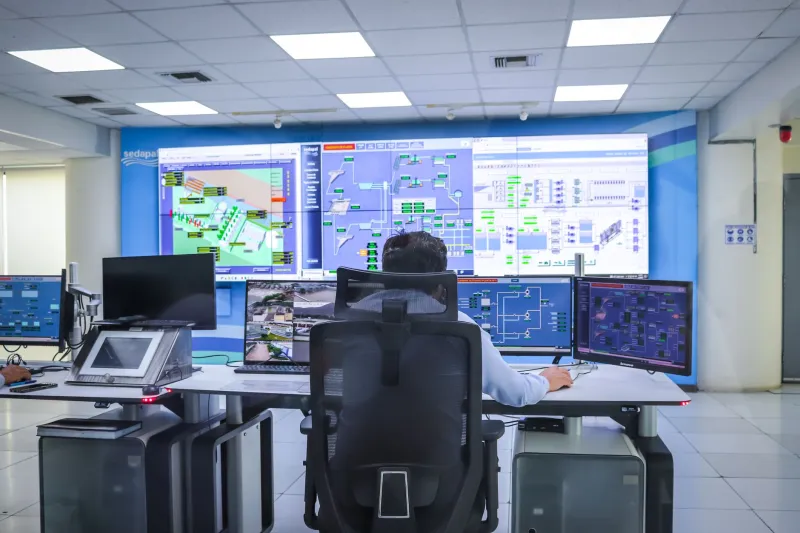
Consider the following scenario: A water treatment facility serving a mid-sized American city operates with a single IT staff member who manages both business systems and the industrial control network that regulates chemical dosing. That individual has no formal cybersecurity training, earns significantly less than entry-level security analysts at nearby technology firms, and has been asked to evaluate a vendor's proposal for network segmentation without the budget to implement it. This is not a hypothetical. Variations of this scenario play out daily across hundreds of water utilities, transit agencies, and regional electric cooperatives throughout the United States.
The cybersecurity workforce shortage in critical infrastructure is not a new problem, but it is an accelerating one. The Cybersecurity and Infrastructure Security Agency has identified sixteen critical infrastructure sectors as essential to national security and public health. Across nearly all of them, the human capacity to detect, respond to, and recover from cyber incidents is dangerously inadequate relative to the threat environment.
The Threat Landscape Is Not Waiting
The adversary community targeting American critical infrastructure has grown more sophisticated, more persistent, and more willing to cause physical harm. The 2021 incident at the Oldsmar, Florida water treatment facility—where an attacker remotely accessed the plant's control system and attempted to increase sodium hydroxide levels to dangerous concentrations—offered a vivid illustration of the consequences that a successful attack on operational technology could produce. The attempt was caught by a vigilant operator, but the episode exposed how thin the margin of human detection can be.
The Colonial Pipeline ransomware attack of the same year demonstrated that even indirect cyber incidents—the pipeline itself was not compromised, but the company shut it down as a precaution while managing a billing system infection—can trigger fuel shortages across multiple states and generate significant economic disruption. The attack cost Colonial an estimated $4.4 million in ransom payments and far more in operational losses and remediation costs.
These incidents are not outliers. The Cybersecurity and Infrastructure Security Agency's annual reports consistently document hundreds of significant cyber incidents affecting critical infrastructure sectors each year, and security researchers broadly agree that reported incidents represent a fraction of actual intrusion activity.
A Workforce in Deficit
The cybersecurity labor market is tight across every industry, but the deficit is particularly acute in critical infrastructure for reasons that compound one another. The global cybersecurity workforce gap is estimated at more than 3.4 million positions, according to ISC2's annual workforce study. Within the operational technology environments that characterize infrastructure systems—industrial control systems, SCADA platforms, programmable logic controllers—the shortage is more severe still, because the skills required are a specialized subset of an already scarce talent pool.
Operational technology security demands a practitioner who understands not only conventional cybersecurity principles but also the engineering logic of physical systems: how a pump behaves under abnormal pressure conditions, why a specific network protocol was designed with availability rather than security as its primary objective, and how to implement security controls without disrupting processes that cannot be safely interrupted. This combination of IT security knowledge and OT domain expertise is rare, and the pipeline for developing it is thin.
The Wage Gap No One Is Talking About Loudly Enough
The compensation disparity between public-sector infrastructure roles and private-sector technology positions is substantial and well-documented, yet it receives insufficient attention in policy discussions. A cybersecurity analyst at a regional water authority or municipal power utility may earn $65,000 to $85,000 annually. The same individual, with the same credentials and experience, could command $110,000 to $150,000 at a technology company, financial institution, or defense contractor.
For early-career professionals carrying student debt and choosing among multiple job offers, the calculus is not complicated. Public service motivations and mission-driven work culture can offset some of the financial gap, but only to a point—and that point is reached more quickly when the individual is also confronting under-resourced security programs, outdated tools, and limited professional development opportunities.
State and local governments face particular constraints. Unlike federal agencies, which can offer specialized pay scales and security clearance pathways that carry their own career value, municipal utilities typically operate within civil service compensation structures designed for a different era and a different labor market. Changing those structures requires political will and legislative action that moves slowly relative to the urgency of the problem.
The Educational Pipeline Misalignment
American universities have expanded cybersecurity program offerings substantially over the past decade, and enrollment in those programs has grown accordingly. Yet the curriculum of most academic cybersecurity programs remains heavily oriented toward information technology environments—enterprise networks, cloud systems, software vulnerabilities—rather than the operational technology environments that characterize critical infrastructure.
A graduate who has learned to conduct penetration testing on web applications or configure security information and event management platforms is not automatically prepared to work in an environment where the assets being protected are physical processes and where a misconfigured firewall rule can cause a pipeline to overpressurize or a water treatment process to malfunction. The translation between IT security and OT security is not trivial, and the educational system has been slow to develop curricula that bridge the gap.
Community colleges and technical schools, which train the workforce that actually operates much of the nation's infrastructure, are even less equipped. Cybersecurity programs at the certificate and associate degree level rarely address industrial control system security in any meaningful depth, leaving a significant portion of the infrastructure workforce without foundational awareness of the threats their systems face.
What Needs to Change
Addressing the cybersecurity talent crisis in critical infrastructure requires action on multiple fronts simultaneously. No single intervention will be sufficient.
Compensation reform at the state and local level must be treated as a national security issue, not merely a human resources matter. Federal programs that provide financial support to utilities and agencies for cybersecurity staffing—analogous to existing grant mechanisms for physical security upgrades—would help level the playing field without requiring each jurisdiction to independently navigate civil service reform.
Specialized workforce development programs that explicitly target the OT security skill set are needed at scale. The Department of Energy's CyberForce program and CISA's various workforce development initiatives represent steps in the right direction, but their reach is limited relative to the size of the problem. Expanding these programs and ensuring their curricula reflect the realities of industrial control system environments should be a legislative priority.
Apprenticeship and earn-while-you-learn models, adapted from the skilled trades sector, offer a promising pathway for developing OT security professionals from within the existing infrastructure workforce. Experienced plant operators and maintenance technicians possess the domain knowledge that is so difficult to teach in a classroom; pairing that knowledge with structured cybersecurity training can produce practitioners who are genuinely equipped for the environment.
Public-private partnerships that allow infrastructure operators to access shared security resources—security operations center services, threat intelligence feeds, incident response capacity—can reduce the burden on individual utilities that cannot afford dedicated security teams. Regional sharing and analysis centers already exist in several sectors; expanding their capabilities and funding is a cost-effective complement to workforce development.
The urgency of this problem is difficult to overstate. The systems that deliver water, electricity, and transportation services to hundreds of millions of Americans are defended, in many cases, by a handful of individuals working with inadequate tools, insufficient training, and compensation that cannot compete with the private market. The adversaries targeting those systems are patient, well-resourced, and growing more capable. The talent gap is not merely an organizational inconvenience—it is a structural vulnerability in the nation's critical infrastructure defense posture, and it demands a response commensurate with that reality.