Penny Wise, Pound Foolish: The True Price of America's Deferred Infrastructure Maintenance
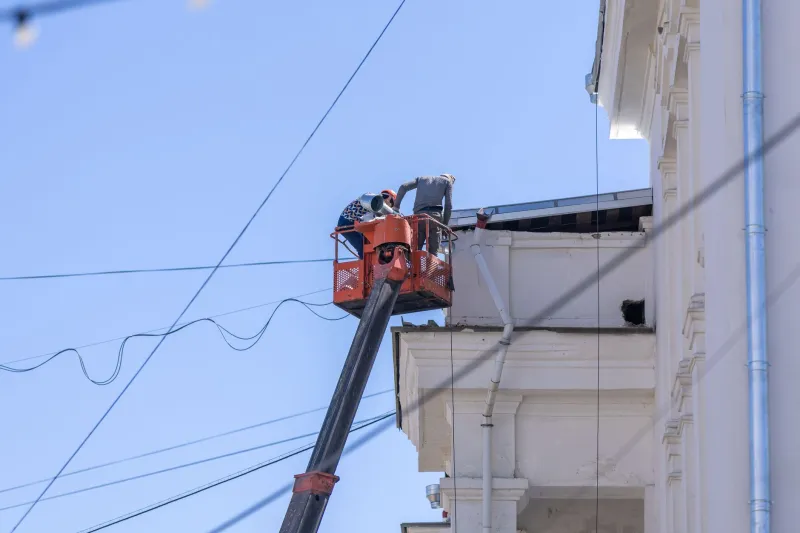
Every year, budget committees at the federal, state, and municipal levels face the same uncomfortable arithmetic: limited revenues, competing priorities, and infrastructure systems that are still—technically—functioning. The result, repeated across decades and across sectors, is the systematic postponement of maintenance, upgrades, and replacement cycles. What appears to be fiscal prudence in the short term is, in fact, one of the most expensive decisions a government can make.
The American Society of Civil Engineers has consistently graded the nation's infrastructure in the C and D range in its Infrastructure Report Card. Behind those letter grades lies an estimated $2.6 trillion funding gap over a ten-year horizon. But aggregate numbers obscure the granular reality of what deferred maintenance actually looks like when systems begin to fail.
When Bridges Become Breaking Points
In 2007, the collapse of the I-35W Mississippi River Bridge in Minneapolis claimed 13 lives and injured 145 others. Subsequent investigations revealed that the bridge had been flagged as structurally deficient years before it gave way. The disaster cost Minnesota and the federal government hundreds of millions of dollars in emergency response, legal settlements, and accelerated replacement construction—an expenditure that dwarfed what a systematic rehabilitation program would have required.
Minneapolis was not an anomaly. According to the Federal Highway Administration, more than 42,000 bridges across the United States are currently classified as structurally deficient. Each one represents a deferred maintenance liability that grows more expensive with every passing inspection cycle. Routine repairs that cost tens of thousands of dollars when addressed promptly can escalate into multi-million-dollar rehabilitation projects—or, in the worst case, emergency demolition and replacement—when neglected for years.
The economic consequences extend well beyond the repair bill. Bridge closures and weight restrictions reroute commercial freight, increasing fuel consumption and delivery times. Local businesses lose access to customers. Emergency response routes are compromised. These secondary costs rarely appear in infrastructure budget analyses, yet they represent a significant portion of the true financial toll.
The Silent Crisis Beneath Our Streets
America's water infrastructure presents an equally sobering picture. The nation's drinking water and wastewater systems were largely constructed in the mid-twentieth century, with design lifespans of 50 to 75 years. Many of those systems are now operating well beyond their intended service life.
The Environmental Protection Agency estimates that water main breaks occur at a rate of approximately 240,000 per year across the United States. Each break carries direct costs—emergency excavation, pipe replacement, water loss, traffic disruption—but also indirect costs in the form of contamination risk, property damage, and the erosion of public trust in municipal water quality.
Flint, Michigan, stands as the most widely publicized case of water infrastructure failure in recent memory. The decision to switch the city's water source without adequate corrosion control treatment led to widespread lead contamination, exposing thousands of children to neurological harm. The financial cost of the crisis—spanning federal emergency declarations, infrastructure remediation, health interventions, and legal settlements—has surpassed $600 million. The human cost cannot be quantified.
Flint's tragedy was not simply an engineering failure. It was the product of chronic underfunding, regulatory lapses, and the kind of short-term decision-making that prioritizes immediate budget relief over long-term system integrity. It is a pattern replicated, in varying degrees of severity, in water systems across the country.
Power Grids and the Compounding Cost of Obsolescence
The United States electrical grid is a patchwork of systems, some components dating to the 1960s and earlier. The average age of large power transformers—critical nodes in transmission infrastructure—exceeds 40 years, and many operate beyond their rated capacity. When these components fail, replacement lead times can stretch to 12 to 18 months due to limited domestic manufacturing capacity and global supply chain constraints.
The 2003 Northeast blackout, which left approximately 55 million people without power across the United States and Canada, was triggered by a software bug and a series of transmission line contacts with overgrown vegetation—failures that better maintenance and monitoring systems could have prevented. The economic cost of that single event was estimated at between $4 billion and $10 billion.
More recently, the February 2021 winter storm that crippled Texas's power grid demonstrated how cascading failures in undertested, undermaintained infrastructure can produce catastrophic humanitarian and economic consequences. Estimates of the total economic damage from that event range from $80 billion to $130 billion—a figure that places it among the costliest infrastructure failures in American history.
The Budget Cycle Trap
Understanding why deferred maintenance persists requires examining the structural incentives that govern public infrastructure spending. Most state and local governments operate on annual budget cycles, and elected officials are accountable to constituents who respond to visible, immediate services rather than invisible preventive maintenance. A repaved road or a new community center generates political capital. Replacing aging water mains that no one sees does not.
Capital improvement plans often compete directly with operating budgets, and in lean fiscal years, infrastructure maintenance is among the first categories to absorb cuts. The consequences of those cuts are diffuse and delayed—they manifest years or even decades later, frequently under a different administration, in the form of emergency expenditures that far exceed what prevention would have cost.
Research from the American Public Works Association suggests that every dollar deferred in infrastructure maintenance generates between $4 and $5 in future costs. That multiplier effect means that today's budget savings are tomorrow's fiscal crisis.
Toward a More Rational Accounting
Breaking this cycle requires policy mechanisms that extend the financial planning horizon beyond the annual budget. Several approaches have demonstrated promise. Asset management frameworks—which systematically track the condition, remaining useful life, and replacement cost of infrastructure components—provide agencies with the data needed to make evidence-based maintenance decisions rather than reactive ones.
Life-cycle cost analysis, when applied consistently in capital planning, reveals the true cost of deferral and makes the economic case for proactive investment. Some states have begun requiring this methodology for major infrastructure decisions, a practice that deserves broader adoption.
Federal programs such as the Infrastructure Investment and Jobs Act of 2021 have injected significant capital into the system, but funding alone is insufficient without the institutional capacity to deploy it strategically. The most resilient infrastructure systems are those managed by agencies with robust asset inventories, disciplined maintenance schedules, and the political cover to prioritize long-term system health over short-term budget optics.
The alternative—continuing to defer, delay, and ultimately pay emergency rates for failures that were foreseeable and preventable—is not a savings strategy. It is a debt accrual strategy, and the bill is already overdue.