Flushed Away: Why America's Wastewater Systems Are the Climate Crisis No One Is Talking About
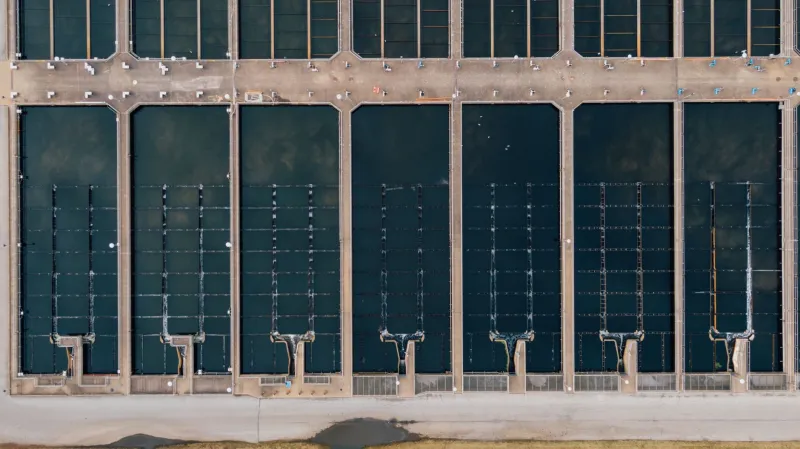
Every time a toilet flushes, a dishwasher drains, or a storm sends runoff cascading into a street gutter, a vast and largely invisible network springs into action. America's wastewater infrastructure — more than 16,000 treatment facilities and nearly 800,000 miles of sewer lines — operates around the clock, performing one of civilization's most essential functions. Yet this system, which protects public health, preserves waterways, and underpins virtually every sector of the economy, is deteriorating at a rate that should alarm anyone serious about national resilience.
The American Society of Civil Engineers has assigned wastewater infrastructure a grade of D+ in recent years. That grade reflects not just aging pipes and overburdened treatment plants, but a systemic failure to treat sanitation as the strategic asset it truly is.
The Age Problem No One Wants to Inherit
A significant portion of America's sewer infrastructure was built in the mid-twentieth century, designed to serve populations and weather patterns that bear little resemblance to present-day realities. Combined sewer systems — those that carry both sewage and stormwater in a single pipe — were engineered with specific rainfall thresholds in mind. When precipitation exceeds those thresholds, the result is a combined sewer overflow (CSO): a discharge of raw or minimally treated sewage directly into rivers, lakes, and coastal waters.
The Environmental Protection Agency estimates that CSOs discharge approximately 850 billion gallons of untreated wastewater into U.S. waterways each year. That figure, staggering on its own, is expected to climb as climate change drives more frequent and intense precipitation events across much of the country.
Beyond combined sewer overflows, the sheer mechanical age of treatment facilities presents compounding risks. Pumping stations, clarifiers, and biological treatment systems designed for 30- to 40-year service lives are routinely operating well past those benchmarks. Deferred maintenance does not simply reduce efficiency — it introduces catastrophic failure as a plausible outcome.
When the System Fails, Communities Pay the Price
The consequences of wastewater system failure are neither abstract nor distant. In August 2021, floodwaters from Hurricane Ida overwhelmed wastewater infrastructure across Louisiana and the Mid-Atlantic, releasing millions of gallons of sewage into neighborhoods and waterways. Jackson, Mississippi, made national headlines in 2022 when its water and wastewater systems — long starved of investment — collapsed simultaneously, leaving residents without reliable sanitation for weeks. The public health fallout from such events extends well beyond the immediate emergency: waterborne illnesses, long-term contamination of drinking water sources, and economic disruption that disproportionately burdens lower-income communities.
These are not isolated incidents. They are previews.
The intersection of climate stress and infrastructure age creates conditions in which system failures will become more frequent, more severe, and more expensive to remediate. Flooding overwhelms treatment capacity. Drought concentrates pollutants and stresses biological treatment processes. Coastal storm surge introduces saltwater intrusion that corrodes equipment and disrupts treatment chemistry. Wastewater systems, unlike roads or bridges, operate continuously — there is no safe window in which to simply close a treatment plant for repairs.
Case Studies in Modernization: What Progress Looks Like
Some communities are not waiting for the next disaster to act. Their experiences offer instructive models for what proactive investment can achieve.
In Washington, D.C., the DC Water authority completed a landmark project in 2018: a 23-mile network of deep rock tunnels designed to capture combined sewer overflows before they reach the Anacostia and Potomac rivers. The Clean Rivers Project, decades in the making, represents one of the most ambitious wastewater infrastructure investments in U.S. history. Early results have been dramatic — CSO volumes into the Anacostia River dropped by more than 98 percent in the years following initial tunnel activation.
In Milwaukee, Wisconsin, the Milwaukee Metropolitan Sewerage District has operated its Deep Tunnel system since 1994, a pioneering underground storage and conveyance network that has prevented billions of gallons of combined sewer overflows. The district has continued modernizing its surface infrastructure in parallel, demonstrating that sustained, long-term investment — rather than crisis-driven spending — produces durable outcomes.
Smaller communities are finding pathways as well. Green infrastructure approaches — permeable pavement, bioswales, rain gardens, and green roofs — are increasingly being deployed to reduce stormwater volumes before they ever reach the sewer network. These nature-based solutions carry the dual benefit of reducing peak loads on aging infrastructure while improving urban livability and environmental quality.
The Funding Gap and the Political Calculus
Despite the scale of the challenge, wastewater infrastructure has historically struggled to command the political attention that roads and bridges attract. The reasons are not difficult to identify. Pipes buried underground generate no ribbon-cutting moments. Treatment plants, tucked away at the edges of cities, remain invisible to most residents until they fail. Politicians find it difficult to campaign on the virtues of a functioning clarifier.
The Infrastructure Investment and Jobs Act of 2021 directed approximately $11.7 billion toward clean water infrastructure, including wastewater systems — a meaningful step, but one that falls well short of the EPA's own estimates of a $271 billion national need over the next two decades. State revolving fund programs, which provide low-interest loans to utilities, remain the primary financing mechanism for most communities, but loan structures can be prohibitive for smaller or financially stressed municipalities that most urgently need capital.
Policymakers must grapple with a fundamental misalignment: the communities with the oldest and most stressed wastewater infrastructure are frequently those with the least fiscal capacity to address it. Without targeted federal support structures that account for this disparity, investment will continue to flow toward communities that need it least.
Elevating Wastewater to Its Proper Strategic Status
The case for treating wastewater resilience as a national priority is not primarily environmental — though the environmental stakes are substantial. It is fundamentally a question of public health security, economic continuity, and national resilience.
A community without functioning wastewater treatment cannot operate hospitals, schools, or restaurants. It cannot attract employers or retain residents. It cannot protect the drinking water sources that downstream communities depend upon. When wastewater infrastructure fails, the cascading consequences cross every sector and jurisdiction.
Building resilient wastewater systems requires action on multiple fronts simultaneously: accelerated capital investment in treatment facility upgrades, aggressive pipe rehabilitation programs, expanded green infrastructure deployment, and workforce development to address the severe shortage of trained wastewater operators and engineers. It also requires a shift in how policymakers and the public conceptualize infrastructure value — recognizing that the systems no one sees are often the ones that matter most.
America has a long tradition of engineering ambition. The question is whether the political will exists to direct that ambition toward the infrastructure that operates silently beneath our feet, day after day, asking nothing in return except the basic commitment of maintenance and investment. The cost of meeting that commitment is significant. The cost of failing to meet it is categorically higher.