Beneath the Surface: How Crumbling Water Infrastructure Threatens National Security and Public Health
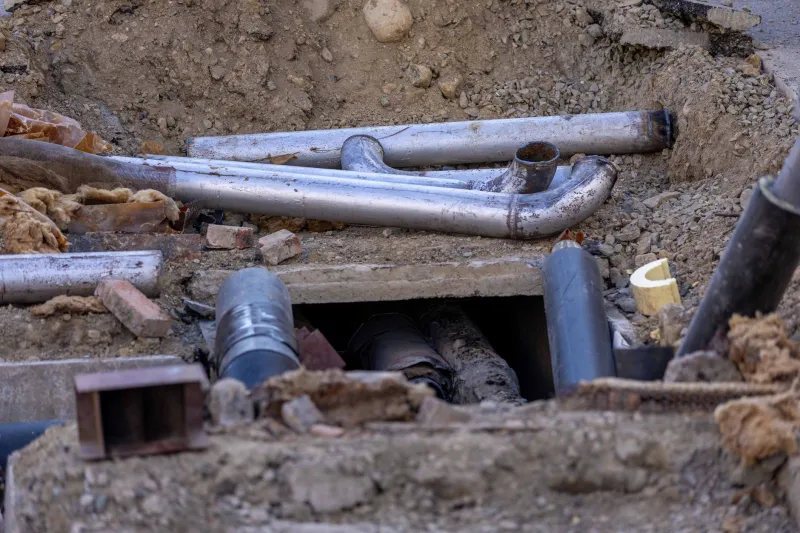
Every two minutes, somewhere in the United States, a water main breaks. That figure — drawn from American Society of Civil Engineers data — translates to roughly 240,000 failures per year across a distribution network that stretches more than one million miles beneath American streets, fields, and communities. The pipes carrying drinking water to homes, hospitals, fire hydrants, and military installations were largely installed between the 1880s and the 1960s. Many were designed to last 75 to 100 years. The math is not encouraging.
What might appear to be a maintenance backlog is, in fact, a compounding national security vulnerability. Water is not merely a public utility — it is the connective tissue of modern civilization. When that tissue tears, the damage radiates outward in ways that are difficult to fully anticipate and even harder to reverse.
A Network Built for a Different America
The infrastructure undergirding America's water supply was engineered for a mid-century population with mid-century demands. Cast iron mains laid during the Progressive Era are now corroding from the inside out, leaching lead and other contaminants into the water supply. Asbestos-cement pipes, once considered a durable innovation, are now aging into fragility. Even the more modern polyvinyl chloride (PVC) systems installed in the 1970s and 1980s are approaching the end of their functional lifespans in many municipalities.
The ASCE's 2021 Infrastructure Report Card assigned America's drinking water infrastructure a grade of C-minus — a modest improvement from prior assessments, but still a signal of systemic underinvestment. The organization estimates a funding gap of $434 billion over the next 20 years simply to maintain existing systems at current service levels. Upgrades to meet growing demand, climate resilience requirements, and modern security standards would push that figure considerably higher.
For smaller and mid-sized cities, the challenge is particularly acute. Unlike major metropolitan areas with diversified tax bases and access to bond markets, rural and mid-tier municipalities often lack the financial architecture to fund large-scale capital improvements. The result is deferred maintenance compounding into infrastructure emergencies.
From Flint to Jackson: The Human Cost of Neglect
The 2014 Flint, Michigan water crisis remains the most prominent case study in the consequences of water infrastructure failure, but it is far from an isolated incident. When Flint switched its water source without implementing adequate corrosion controls, lead leached from aging pipes into the supply, exposing tens of thousands of residents — disproportionately children — to dangerous contamination levels. The public health fallout continues to reverberate nearly a decade later, with elevated rates of developmental disorders and a community still rebuilding its trust in government institutions.
In Jackson, Mississippi, a series of water system failures between 2021 and 2022 left the state capital without safe running water for weeks at a time. The crisis exposed not only decaying infrastructure but also the governance gaps that allow systems to deteriorate without accountability. Jackson's water utility had been flagged by federal regulators for violations years before the emergency, yet corrective investment never materialized at the scale required.
These are not anomalies. They are previews. Across the country, utilities are operating aging systems with inadequate monitoring, insufficient staffing, and capital budgets that bear no relationship to the scale of the problem.
The Security Dimension
Infrastructure professionals and national security analysts have increasingly converged on a troubling assessment: water systems represent one of the most exposed critical infrastructure sectors in the United States. The Cybersecurity and Infrastructure Security Agency (CISA) classifies water and wastewater systems as a critical infrastructure sector, and federal threat assessments have repeatedly identified both physical and cyber vulnerabilities in water utilities.
Physical degradation amplifies cyber risk. Older systems frequently rely on outdated supervisory control and data acquisition (SCADA) technology that was never designed with network security in mind. A corroding pipe network is difficult and expensive to monitor; an inadequately secured digital control system creates an entry point for adversarial interference. The 2021 attempted cyberattack on the Oldsmar, Florida water treatment facility — in which an intruder remotely attempted to increase sodium hydroxide levels to dangerous concentrations — illustrated how consequential a successful breach could be.
Beyond cyber threats, the physical interdependencies of water infrastructure mean that failures cascade. A major water main break can compromise fire suppression capacity, disrupt hospital operations, shut down manufacturing facilities, and contaminate groundwater. In dense urban environments, underground pipe failures can destabilize roadways and building foundations. The economic cost of a single significant water main failure in a major city can run into the tens of millions of dollars when downstream disruptions are fully accounted for.
Emerging Technologies for an Aging Network
The engineering community has not been idle. A generation of pipe rehabilitation and replacement technologies has emerged that offers utilities more cost-effective options than full excavation and replacement.
Cured-in-place pipe (CIPP) lining, for instance, allows contractors to rehabilitate deteriorating mains from the inside, inserting a resin-saturated liner that cures to form a new pipe wall without the need to dig up streets. The technique dramatically reduces project timelines, traffic disruption, and overall cost. Several cities — including Philadelphia and Denver — have deployed CIPP at scale as part of broader asset management strategies.
Advanced acoustic leak detection systems, which use sensors and machine learning algorithms to identify pipe stress and micro-leaks before they become main breaks, are also gaining traction. Louisville Water Company, widely regarded as a leader in infrastructure asset management, has integrated predictive analytics into its maintenance protocols, allowing crews to prioritize interventions based on failure probability rather than reacting to crises after the fact.
Trenchless pipe replacement technologies, including pipe bursting and horizontal directional drilling, offer additional options for utilities seeking to upgrade mains with minimal surface disruption. These methods are particularly valuable in urban environments where excavation costs and collateral damage to surrounding infrastructure can dwarf the cost of the pipe replacement itself.
Financing the Fix
Technology is only part of the equation. Sustainable water infrastructure investment requires financing mechanisms that match the scale and duration of the challenge.
The Infrastructure Investment and Jobs Act, signed into law in 2021, allocated $55 billion to water infrastructure — the largest federal investment in the sector in American history. A significant portion flows through the Environmental Protection Agency's State Revolving Fund programs, which provide low-interest loans and grants to utilities for infrastructure upgrades. Early implementation data suggests the funding is reaching communities that had previously been unable to access capital markets for major projects.
Beyond federal appropriations, a growing number of states and municipalities are exploring water resilience bonds, public-private partnerships, and tiered rate structures designed to build dedicated capital reserves for long-term infrastructure investment. Some utilities have adopted asset management frameworks modeled on those used in the transportation and energy sectors, establishing actuarial approaches to infrastructure lifecycle planning that make the case for sustained investment in terms that resonate with elected officials and bond rating agencies alike.
Water affordability remains a genuine tension in this conversation. Rate increases necessary to fund capital improvements can impose disproportionate burdens on lower-income households. Several cities, including Baltimore and Pittsburgh, have experimented with income-indexed billing structures that maintain affordability for vulnerable residents while generating the revenue streams required for infrastructure renewal.
The Imperative of Urgency
America's water infrastructure crisis has been building for decades, and the instinct to treat it as a background problem — chronic rather than acute — has proven costly. The Flint and Jackson crises demonstrated that deferred maintenance eventually produces emergencies, and that emergencies fall hardest on communities least equipped to absorb them.
Framing water infrastructure investment as a national security imperative, rather than simply a public works priority, may be the most effective way to generate the sustained political will that modernization requires. The pipes beneath American communities carry far more than water. They carry public health, economic stability, and the foundational trust between citizens and the institutions designed to serve them. Allowing that foundation to corrode further is not a fiscal choice — it is a strategic risk that the nation can no longer afford to defer.