Broken Links: How Fragile Global Supply Chains Are Stalling America's Infrastructure Revival
When Congress passed the Infrastructure Investment and Jobs Act in 2021, it authorized more than $1.2 trillion to rebuild the arteries of American commerce and daily life — highways, bridges, water systems, broadband networks, and electrical grids. The legislation represented one of the most ambitious public works commitments in a generation. What it could not authorize, however, was the reliable delivery of the materials required to execute that vision.
Nearly four years on, infrastructure project managers across the country are confronting a discomfiting reality: funding alone does not build a bridge. Steel does. Copper does. Microchips do. And for each of these essential inputs, domestic supply remains dangerously thin relative to the scale of demand now coursing through the system.
The Steel Gap and the Bridge Backlog
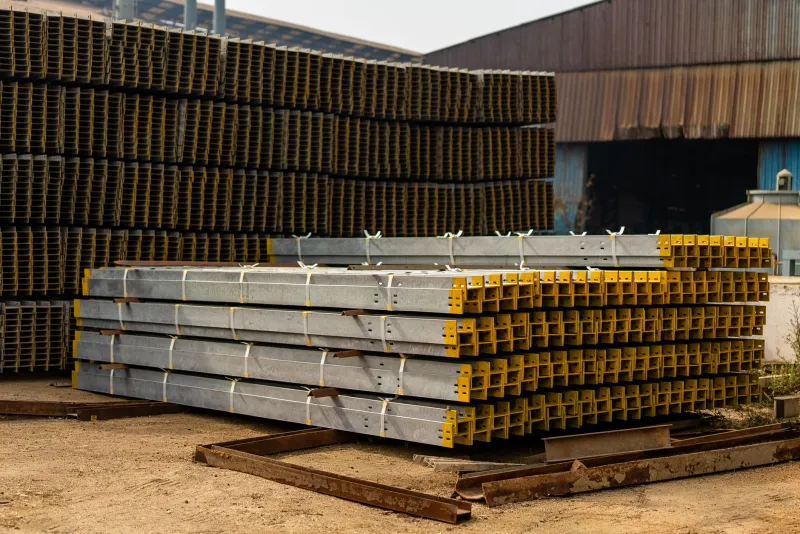
America's bridge inventory illustrates the problem with particular clarity. According to the American Society of Civil Engineers, more than 42,000 bridges across the United States are currently rated structurally deficient. Many of these rehabilitation projects require large quantities of structural steel — wide-flange beams, plate girders, and high-strength bolting assemblies — that domestic mills are struggling to produce at the volumes and lead times project schedules demand.
Domestic steel capacity, while substantial by historical standards, was strained by pandemic-era production shutdowns that took years to fully reverse. Meanwhile, tariff regimes intended to protect American producers have simultaneously driven up input costs for contractors who cannot always source domestically within their bid windows. The result is a squeeze from both directions: limited availability and elevated pricing.
"We're winning bids and then watching our material assumptions evaporate within six months," said one senior project director at a mid-Atlantic infrastructure firm, speaking on background. "The gap between what steel costs when you estimate and what it costs when you actually procure is becoming a serious budget integrity problem."
Delays compound. When structural steel arrives late, it cascades into postponed concrete pours, rescheduled inspections, and extended lane closures that carry their own economic costs. The Federal Highway Administration has documented instances where supply-driven delays have added 15 to 30 percent to original project timelines on federally funded bridge contracts.
Semiconductors and the Smart Grid Stalemate
If steel shortages represent an old problem in a new context, the semiconductor bottleneck afflicting electrical grid modernization is a newer and, in some respects, more strategically alarming phenomenon.
Modern grid infrastructure is not simply wire and transformer. Advanced metering infrastructure, distribution automation systems, protective relays, and grid-edge sensors all depend on specialized semiconductors — chips that are, in the vast majority of cases, manufactured in Taiwan, South Korea, or elsewhere in East Asia. When pandemic disruptions, geopolitical tensions, and surging demand from the automotive and consumer electronics sectors converged in 2021 and 2022, lead times for certain grid-critical chips stretched to 52 weeks or longer.
Though conditions have partially normalized, utility procurement officers describe a market that remains structurally vulnerable. A single point of geopolitical stress in the Taiwan Strait, they note, could recreate — or worsen — those conditions overnight.
"We are building a 21st-century grid on a supply chain that has single points of failure we would never accept in the grid itself," one utility executive observed during a recent industry conference in Washington, D.C. "That's an extraordinary contradiction."
The CHIPS and Science Act, signed into law in 2022, allocated $52 billion to stimulate domestic semiconductor manufacturing. Foundry projects are underway in Ohio, Arizona, and New York. But semiconductor fabrication facilities require years to construct and qualify, meaning the supply relief they promise remains years away for the utilities and contractors who need it now.
Cascading Costs and Budget Erosion
The financial consequences of supply disruption are not merely inconvenient — they are structurally corrosive to infrastructure investment itself. Federal and state appropriations are typically fixed at authorization. When material costs inflate or timelines extend, the gap must be absorbed somewhere: through scope reductions, value engineering that compromises long-term resilience, or supplemental funding requests that face uncertain political prospects.
A 2023 analysis by the Associated General Contractors of America found that more than 80 percent of construction firms had experienced project delays attributable to material shortages in the preceding 12 months, with a significant proportion reporting cost overruns exceeding 10 percent of original contract value. For a federal infrastructure program operating at the scale authorized by the IIJA, even modest percentage overruns translate into billions of dollars of diminished output.
The implications for public confidence are equally serious. Infrastructure projects that run over budget and behind schedule erode the political will that sustains long-term investment. Each delayed bridge or deferred grid upgrade becomes a data point in an argument against the efficacy of public works spending — regardless of whether the root cause lies in supply chains rather than project management.
Reshoring Strategies and the Domestic Manufacturing Imperative
Against this backdrop, a growing number of industry leaders and federal officials are pressing for a more deliberate reshoring strategy — one that treats domestic manufacturing capacity for infrastructure materials as a matter of national security rather than purely commercial policy.
The Buy America provisions embedded in the IIJA represent a meaningful step in this direction, requiring that iron, steel, manufactured products, and construction materials used in federally funded infrastructure projects be produced domestically. Implementation has been uneven, and waivers remain available when domestic supply is demonstrably inadequate. But the directional signal is clear: the federal government intends to use its procurement power to stimulate domestic production.
Several states have moved further. Virginia and Michigan have launched targeted workforce and industrial development programs aimed at attracting manufacturers of grid equipment and construction materials, recognizing that supply chain resilience begins with the industrial base.
Private capital is also responding. Venture and infrastructure funds have directed increasing attention toward domestic producers of specialty steel, electrical conduit, and grid components — sectors that were long considered unglamorous but now carry a strategic premium.
Building Supply Chain Resilience Into Project Planning
Beyond manufacturing policy, practitioners are adapting their project management approaches to account for supply chain risk as a first-order variable rather than an afterthought.
Long-lead procurement — the practice of ordering critical materials months or years before they are needed on-site — is becoming standard on large-scale infrastructure contracts. Some state transportation departments are developing material reserves, essentially strategic stockpiles of high-demand components that can be drawn down when spot market conditions deteriorate.
Digital tools are also being deployed to improve supply chain visibility. Platforms that track material provenance, monitor supplier capacity, and flag early warning indicators of disruption are gaining adoption among larger infrastructure owners and their engineering consultants.
None of these adaptations fully resolves the underlying structural vulnerability. They are, in the near term, necessary workarounds for a system that has not yet built the domestic industrial depth that its infrastructure ambitions require.
A Resilience Gap That Demands a Systemic Response
America's infrastructure renewal program is, at its core, a bet on the future — a commitment to the physical systems that will carry commerce, energy, water, and information for decades to come. That bet is being hedged, unintentionally, by dependence on supply chains that are neither reliable nor fully within domestic control.
Addressing this vulnerability will require sustained coordination among federal agencies, state governments, private industry, and the financial sector. It will require patience, because manufacturing capacity is not rebuilt in a single appropriations cycle. And it will require a willingness to treat supply chain resilience not as a procurement technicality but as a foundational dimension of infrastructure policy.
The systems that keep America running are only as strong as the supply chains that build them. Strengthening those chains is not separate from the work of infrastructure resilience — it is central to it.